
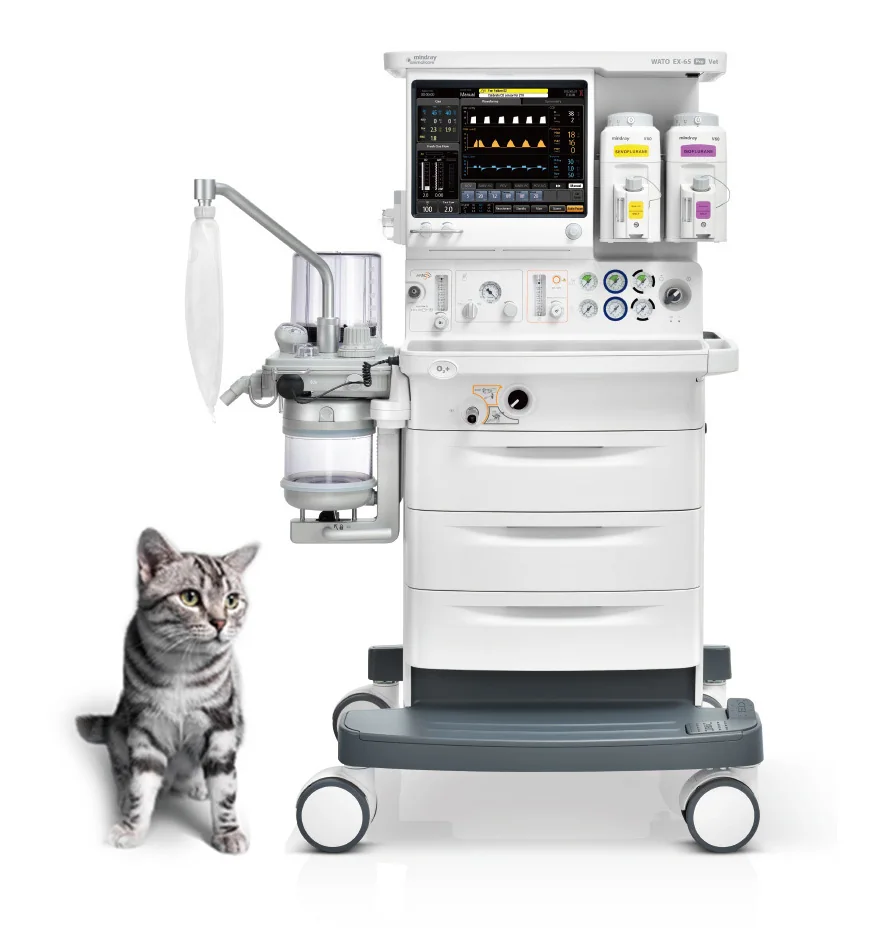
The right veterinary anesthesia machine is selected around the patient population and procedure—not one headline specification. Confirm the breathing circuit, vaporizer, oxygen-flow range, ventilation modes, monitoring connections, alarms, scavenging plan, cleaning workflow, service coverage, and model-specific documentation before ordering.
A reliable veterinary anesthesia machine is foundational equipment for animal hospitals, private veterinary clinics, and biological research laboratories. Its configuration affects gas delivery, ventilation, monitoring, recovery workflow, and the repeatability required in research environments.
Selection can become difficult when entry-level systems are compared only by price. Poor scenario matching, unstable output, unsuitable breathing resistance, missing safety controls, or incomplete documentation can create avoidable clinical and operational risk. This guide follows the supplied 2026 buying framework while separating model-dependent specifications from general selection principles.
Choose Veterinary Anesthesia Machines by Application Scenario
Scenario matching is the first purchasing decision. Animal size, procedure type, daily workload, room conditions, and operating environment determine the appropriate anesthesia-system configuration.
Small Animal & Pet Clinic Use
Dogs, cats, rabbits, and exotic pets have different airway, circuit, and ventilation requirements. For routine sterilization, orthopedic procedures, and soft-tissue operations, evaluate low-flow control, suitable breathing circuits, gentle ventilation capability, monitoring integration, and an efficient recovery workflow.
Laboratory & Research Use
Projects involving mice, rats, guinea pigs, or primates may require stable, repeatable output and, where appropriate, multi-channel configurations for batch workflows. Confirm how channels are controlled, isolated, monitored, cleaned, and documented before comparing research systems.
Large Animal & Livestock Use
Horses, cattle, and sheep may require higher gas-flow capacity, pressure compensation, large-animal breathing circuits, and ventilation suitable for higher tidal volumes and longer procedures. Ask the supplier to confirm the patient-weight range and intended clinical use in writing.
Review Mevidon veterinary anesthesia solutions
Compare available clinical and research configurations, then request model-specific documentation for your animals and destination market.
View Veterinary Anesthesia Machines →Core Technical Specifications That Define Anesthesia Precision
Precision hardware influences gas delivery, ventilation performance, repeatability, and service life. Compare the vaporizer, mechanical ventilation system, and oxygen-flow control as a complete system rather than isolated components.
Precision anesthetic vaporizer
Confirm compatibility with the intended anesthetic agent, calibration method, concentration range, output-stability evidence, filling system, capacity, and maintenance interval. The supplied source references accuracy around ±0.1% and a 0.5%–5.0% adjustable range; treat these as procurement targets only and verify the exact values in the selected model’s current technical documentation.
Mechanical ventilation
For complex procedures, confirm the supported ventilation modes—such as VCV, PCV, or PSV where offered—together with pressure sensing, proportional-valve control, leakage calibration, airway-pressure compensation, tidal-volume range, and alarm behavior. Requirements differ substantially between small and large animals.
Adjustable oxygen flow
The source material identifies an intended comparison range from 0.2 L/min for small animals to 10 L/min for large-animal workflows. Do not assume every configuration covers this full range: request the installed flowmeter range, resolution, accuracy, inlet requirements, and suitable patient applications for the exact quoted model.
Safety Protection and Global Compliance Standards
Review respiratory monitoring connections and alarms for airway pressure, respiratory rate, and abnormal parameters. The final setup should support the monitoring and emergency procedures defined by qualified veterinary professionals.
Also evaluate backup power where required, operating noise, detachable and sterilizable pipelines, cleaning access, spare parts, and preventive maintenance. CE, FDA, environmental, and institutional requirements are model- and destination-dependent: confirm the applicable certificates, registrations, test reports, and intended-use wording before purchase.
Common Buying Mistakes and Professional Selection Tips
- Avoid generic low-cost equipment without documented veterinary suitability. Confirm calibration, intended patients, breathing-circuit options, service support, and user training.
- Judge vaporizers and sensors by evidence, not origin labels. Request calibration records, accuracy data, maintenance requirements, component traceability, and warranty terms.
- Verify alarms and waste-gas controls. Make sure the quoted configuration matches the facility’s safety plan and applicable local requirements.
- Select channel count by real workload. Match single- or multi-channel systems to daily surgery volume, research design, staff capacity, and cleaning workflow.
Match the anesthesia system to your real workflow.
Send your animal types, patient weights, procedures, case volume, destination country, and required ventilation or monitoring functions. Mevidon can help identify a suitable configuration and provide the applicable model documents for review.